
How to Learn Fast at Any Age: 4 Neuro Levers and Advanced Hacks

Thinking about returning to university, changing careers, or learning a completely new skill, but worried your brain may no longer absorb information as quickly as it did when you were younger? Adults can continue learning throughout life and may have valuable advantages, including experience, prior knowledge, and more deliberate strategies. In this article, we explore four fundamental brain levers and four advanced techniques that can help you learn new skills faster and more effectively at any age.

Feeling slower does not mean that your brain has lost the ability to learn. Research on adult cognitive plasticity suggests that the brain remains capable of adapting in response to experience, although the extent and pace of change vary across people, abilities, and stages of life (Lövdén et al., 2010). Age also does not affect every cognitive ability in the same way or at the same time (Hartshorne & Germine, 2015).
Adults may not learn exactly as children do, but they bring important advantages: existing knowledge, real-world experience, and the ability to choose deliberate strategies. The goal is not to force more information into your head. It is to make learning more active, focused, and retrievable.
The following four “brain levers” and four advanced techniques are grounded in learning research, but no strategy works equally well for everyone or every task. Try them individually or combine them to make your study time more active and effective.
Too Old to Learn? Why Adults Need a Different Approach
Children may have an advantage in some types of implicit learning and language acquisition, but that does not make adulthood a dead end for learning. Adults can approach new material more strategically, using patterns, context, and clear goals to guide their progress.
The harder part may be accepting the beginner stage. When a new skill does not click immediately, it is tempting to reread the same material, avoid challenging exercises, or blame age. Often, the more useful question is simpler: “Am I using a method that makes me recall and apply what I have learned?”
The 4 Fundamental Brain Levers for Faster Learning
1. Trigger the “Error Signal” (Prediction Error): Start With a Challenge, Not a Tutorial
Many people prepare by watching tutorials, highlighting pages, and saving articles, but delay attempting the actual task. This can create familiarity without revealing what they can do independently.
Begin with a short diagnostic challenge. Write five sentences before reviewing grammar, attempt one realistic software task before watching the full tutorial, or answer several practice questions before reopening your notes. The purpose is not to seek intense frustration but to expose specific gaps. Research suggests that mismatches between expectation and outcome can influence memory, but effects differ by age, context, and information type (Shing & Brod, 2023). More simply, a first attempt tells you what to study.
Try this: Spend 5–10 minutes attempting one manageable problem. Then write down:
- What did I know?
- Where did I hesitate?
- What information would help me make a better second attempt?
Now the explanation you read has a job: it answers a question your brain has already encountered.
2. Activate Effortful Retrieval: Replace Rereading With Active Recall
Rereading feels productive because the material becomes familiar. But recognizing an answer is not the same as producing it from memory.
Retrieval practice means recalling information without the source. In one study, students who practiced retrieval showed stronger meaningful learning than those who studied through concept mapping (Karpicke & Blunt, 2011). Reading and concept maps still have value, but learning should include moments when support is removed.
Try the three-minute blank-page method:
- Study one short section.
- Close the source.
- Write everything you can remember for three minutes.
- Reopen the source and correct omissions or errors.
- Test yourself again later without looking.
The blank page may initially feel harder than rereading. That difficulty is useful because it reveals the difference between “I have seen this” and “I can explain this.”
3. Use the Spacing Effect (Distributed Practice): Space Your Practice Across Time
A long session can improve performance while material is fresh. For later recall, distributing practice across sessions is generally more effective than concentrating the same exposure into one block. A review covering hundreds of experiments found benefits from distributed practice, although the best interval depends on the desired retention period (Cepeda et al., 2006).
Spacing does not require a complicated algorithm. What matters is returning to the material after some forgetting has occurred.
Try this simple schedule:
- First retrieval: at the end of the learning session
- Second retrieval: the following day
- Third retrieval: three to seven days later
- Later retrievals: gradually increase the interval when recall is successful
If you cannot recall an answer, check it, understand the correction, and try again. Struggling briefly is different from repeatedly guessing without feedback.
4. Lower Mental Noise: Protect Your Attention and Take the Pressure Off
Learning competes with notifications, open tabs, worries, and self-monitoring. Acute stress can impair working memory and cognitive flexibility, although effects vary by situation and person (Shields et al., 2016). Not all stress prevents learning, but avoidable pressure can consume resources needed for the task.
Silence nonessential notifications, define one outcome for the session, and keep distracting thoughts on a separate “later” list.
Try this: If being a beginner feels threatening, use a temporary role reset: For the next 30 minutes, my goal is not to look competent. My goal is to identify three things I cannot do yet.
This is not a clinical stress-management protocol. It is a practical reframing technique that may help some learners remain engaged long enough to practice and receive feedback.
Four Advanced Speed-Learning Hacks for Adults
5. Connect New Ideas to Something You Already Know
One of the advantages of learning as an adult is having years of knowledge and experience to draw on. Analogical reasoning helps you understand something unfamiliar by comparing it with a system you already know (Gentner & Maravilla, 2018).
For example, imagine you are learning how a distributed database works. You might compare it to a restaurant kitchen where several stations handle different parts of an order at the same time. This makes the basic structure easier to picture.
However, no analogy is perfect. It is important to identify both what the two systems have in common and where the comparison stops working.
Try this: Divide a page into three columns: “New concept,” “Something familiar,” and “Key differences.” This can help you connect new information to what you already understand without oversimplifying it.
6. Draw the Idea, Not Just the Words
For relationships, processes, or systems, create a rough visual representation. Experiments on the “drawing effect” found better recall for drawn words than written words, although drawing may not benefit every subject or task (Wammes et al., 2016).
Artistic skill is irrelevant. Draw causes and effects, sketch a workflow, or place concepts on a timeline. The value comes from deciding what each element means and how it connects.
Try this: After reading a complex section, create a one-minute sketch without copying the original diagram. Then explain your drawing aloud. If you cannot explain one of your own arrows, you have found the next gap to review.
7. Mix Related Skills Instead of Practicing One at a Time
Repeating the same type of exercise can make you feel confident, but often because you already know which method to use. Interleaving makes practice more challenging by mixing related tasks, so you must first recognize the problem and then choose the right approach. A meta-analysis found that this method can support learning, particularly when people need to distinguish between similar categories, although it does not work better in every situation (Brunmair & Richter, 2019).
Imagine you are learning French. Instead of spending an hour using only the past tense, mix short exercises that require the past, present, or future. Now you must decide which tense fits each sentence rather than applying the same rule automatically.
Try a 3 × 20 session: Choose three closely related skills and practice each for 20 minutes. Once you understand the basics, mix the exercises together. The goal is not to jump randomly between unrelated subjects, but to learn how to recognize when each skill should be used.
8. Give New Learning a Quiet Landing
Opening email or social media immediately after a demanding session introduces more information. Quiet wakeful rest offers an alternative.
A 2025 meta-analysis of 37 studies found that wakeful rest after learning was associated with better memory performance, with variation across ages and memory measures (Weng et al., 2025). It did not establish that a branded method, particular brainwave state, or exact duration accelerates every kind of learning.
Try this: After an intensive session, spend 10-15 minutes sitting or lying quietly without your phone or deliberate rehearsal. If that is impractical, take a quiet walk without audio. Treat this as a protected transition, not a guaranteed shortcut.
The Bottom Line
Learning something new as an adult can be frustrating, especially when progress feels slower than expected and you start wondering whether age is the problem. But learning does not suddenly stop after a certain birthday. Sleep, health, previous experience, motivation, feedback, and the difficulty of the task can all affect how quickly something begins to make sense.
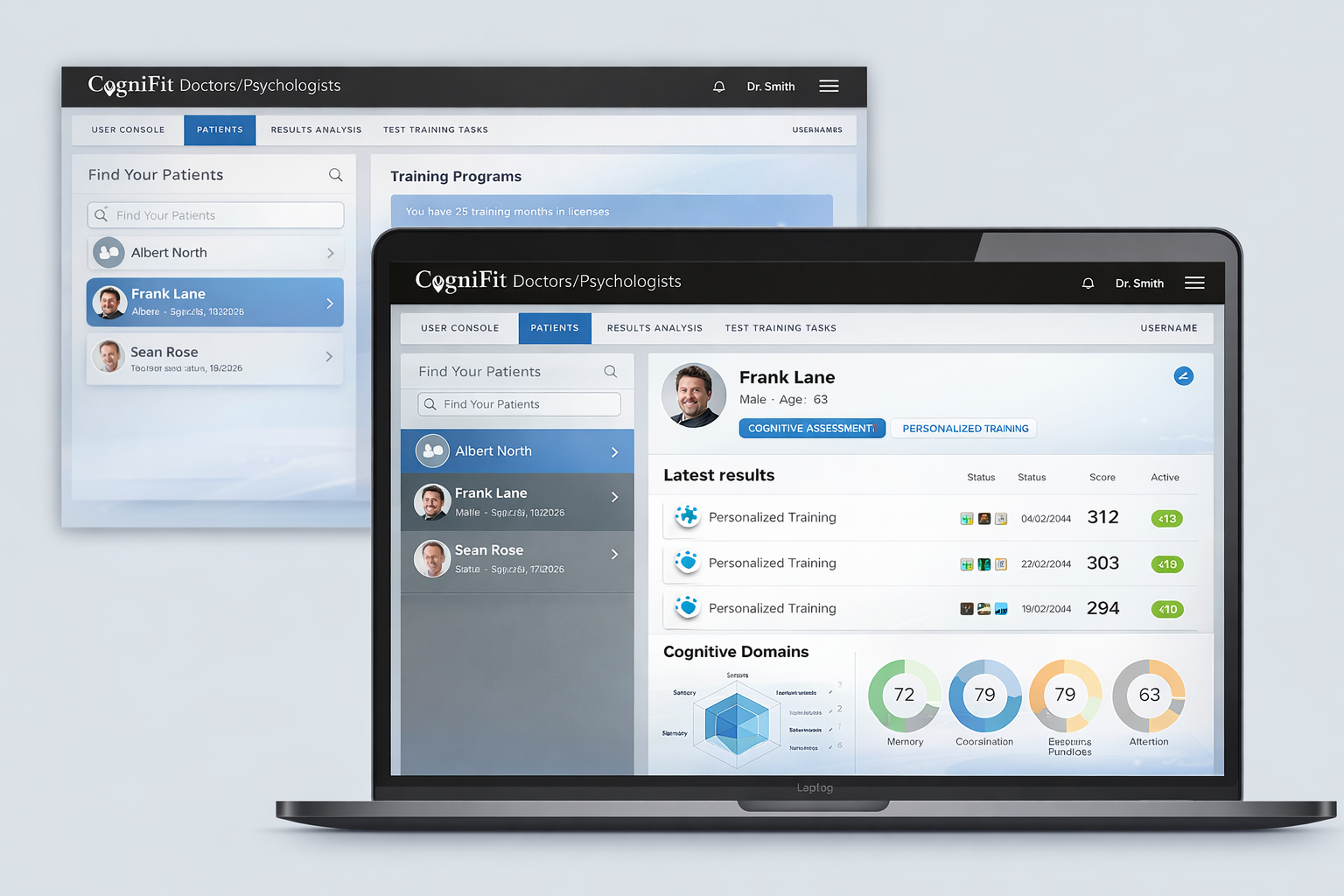
Online cognitive training can add regular, structured practice to your learning routine, with activities involving attention, memory, and reasoning. Adaptive platforms adjust the difficulty to your performance and let you follow your activity over time, making it easier to maintain a consistent routine.
The key is to study actively: try before you feel completely ready, recall information without looking, return to it after a break, mix related skills, and allow time for rest. Adults do not need to learn exactly as children do. They can use their experience, and choose methods that make new knowledge easier to recall and apply.
The information in this article is provided for informational purposes only and is not medical advice. For medical advice, please consult your doctor.
References
- Lövdén, M., Bäckman, L., Lindenberger, U., Schaefer, S., & Schmiedek, F. (2010). A theoretical framework for the study of adult cognitive plasticity. Psychological Bulletin, 136(4), 659–676. https://doi.org/10.1037/a0020080
- Hartshorne, J. K., & Germine, L. T. (2015). When does cognitive functioning peak? The asynchronous rise and fall of different cognitive abilities across the life span. Psychological Science, 26(4), 433–443. https://doi.org/10.1177/0956797614567339
- Shing, Y. L., Brod, G., & Greve, A. (2023). Prediction error and memory across the lifespan. Neuroscience & Biobehavioral Reviews, 155, 105462. https://doi.org/10.1016/j.neubiorev.2023.105462
- Karpicke, J. D., & Blunt, J. R. (2011). Retrieval practice produces more learning than elaborative studying with concept mapping. Science, 331(6018), 772–775. https://doi.org/10.1126/science.1199327
- Cepeda, N. J., Pashler, H., Vul, E., Wixted, J. T., & Rohrer, D. (2006). Distributed practice in verbal recall tasks: A review and quantitative synthesis. Psychological Bulletin, 132(3), 354–380. https://doi.org/10.1037/0033-2909.132.3.354
- Shields, G. S., Sazma, M. A., & Yonelinas, A. P. (2016). The effects of acute stress on core executive functions: A meta-analysis and comparison with cortisol. Neuroscience & Biobehavioral Reviews, 68, 651–668. https://doi.org/10.1016/j.neubiorev.2016.06.038
- Gentner, D., & Maravilla, F. (2018). Analogical reasoning. In L. J. Ball & V. A. Thompson (Eds.), International Handbook of Thinking and Reasoning (pp. 186–203). Psychology Press. https://groups.psych.northwestern.edu/gentner/papers/GentnerMaravilla_2018-Handbook.pdf
- Wammes, J. D., Meade, M. E., & Fernandes, M. A. (2016). The drawing effect: Evidence for reliable and robust memory benefits in free recall. Quarterly Journal of Experimental Psychology, 69(9), 1752–1776. https://doi.org/10.1080/17470218.2015.1094494
- Brunmair, M., & Richter, T. (2019). Similarity matters: A meta-analysis of interleaved learning and its moderators. Psychological Bulletin, 145(11), 1029–1052. https://doi.org/10.1037/bul0000209
- Weng, L., Yu, J., Lv, Z., Yang, S., Jülich, S. T., & Lei, X. (2025). Effects of wakeful rest on memory consolidation: A systematic review and meta-analysis. Psychonomic Bulletin & Review, 32(5), 1937–1968. https://doi.org/10.3758/s13423-025-02665-x