
Study names CogniFit #1 most used app among therapists in India

New clinical data from India highlights the growing role of CogniFit in neurorehabilitation practice, with a 2026 study identifying it as the most commonly used application among occupational therapists (OTs) who incorporate digital tools into their clinical work.

Published in BMC Health Services Research, the study “Utilisation of mobile apps in neurological rehabilitation practice among occupational therapists in India: a cross-sectional survey” surveyed 166 therapists across India and found that CogniFit ranked as the most frequently used app for both cognitive assessment and intervention within the study sample.
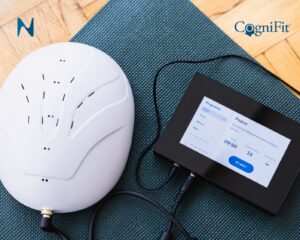
This refers to the use of the CogniFit platform for healthcare in clinical practice.
This finding reflects a broader shift taking place across healthcare systems: digital tools are moving beyond experimentation and becoming embedded in real clinical workflows. In neurorehabilitation, where repetition, engagement, and personalization are essential, app-based digital tools are increasingly used not as supplementary tools, but as an integral part of the therapeutic process.
What makes this transition particularly significant is not simply the availability of digital tools, but the consistency with which they are being used in real clinical environments. In many areas of healthcare, technology adoption often remains fragmented or experimental. In contrast, the data emerging from this study suggests that, within neurorehabilitation, mobile applications are beginning to establish a stable role in everyday therapeutic routines.
The Digital Shift in Indian Neurorehabilitation
The integration of digital tools into clinical practice is accelerating in India, with new data highlighting how widely they are already used by therapists. According to the authors of the study, “Of the 166 occupational therapists included in the analysis, 70 (42%) reported using apps in their clinical practice”. Among those who use apps, 80% incorporate them into therapeutic interventions, while 40% also use them for assessment.
Within this growing adoption, CogniFit stands out as the most frequently used solution across both use cases in the study sample, reflecting its integration into real clinical workflows.
These figures indicate that digital tools are already embedded across multiple stages of care, supporting both evaluation and ongoing intervention rather than serving as isolated or experimental solutions.
CogniFit Across the Full Clinical Workflow
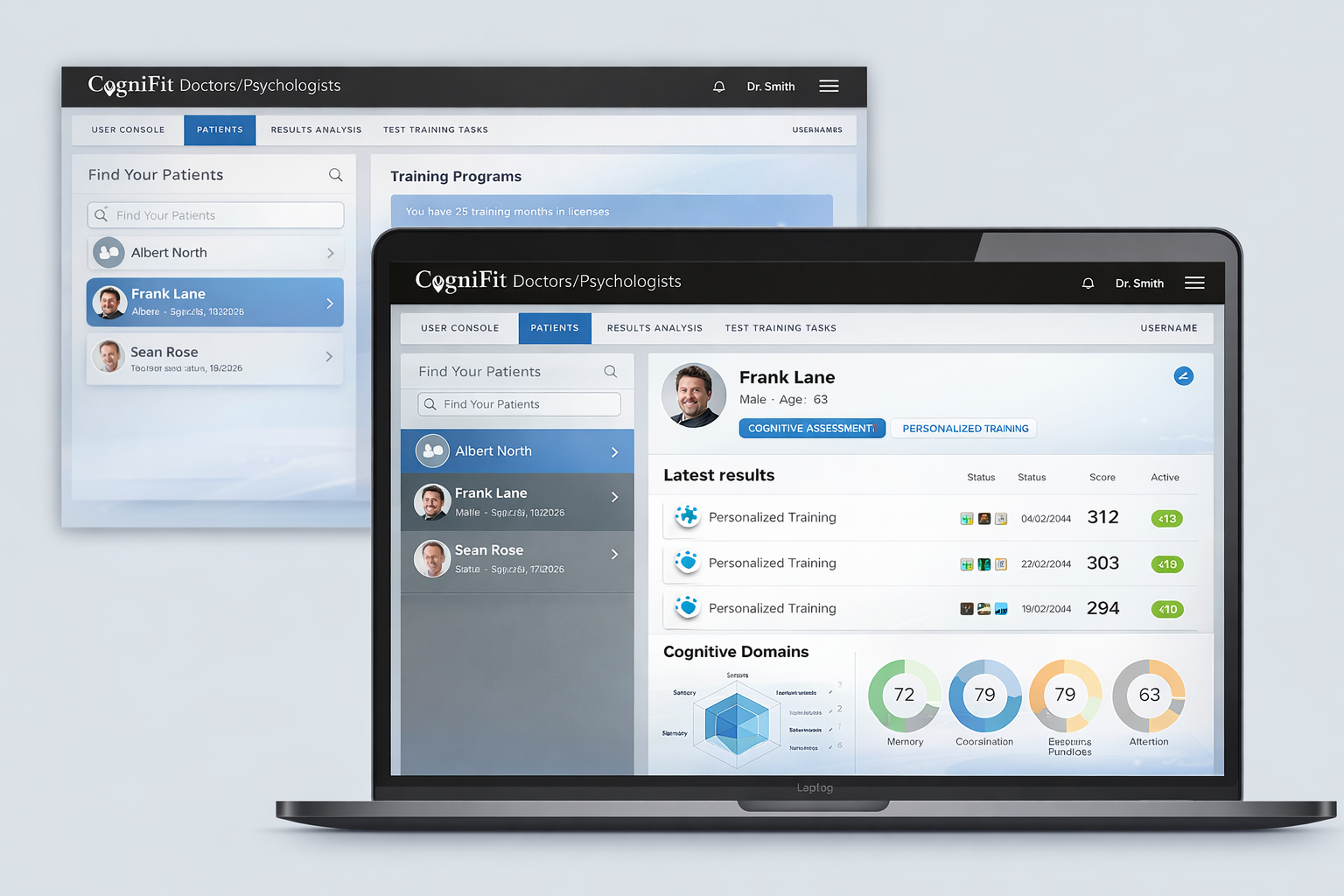
Within the range of digital tools identified in the study, CogniFit stands out for its consistent use across both primary clinical functions: assessment and intervention. These tools are intended for cognitive assessment and training purposes and are not designed to provide medical diagnosis.
Among therapists who reported using apps for evaluation, CogniFit was identified as the most commonly used application for assessing cognitive functions within the study sample. This aligns with the central role of cognition in neurorehabilitation, where clinicians focus on domains such as attention, memory, and executive function.
At the same time, CogniFit was also the most frequently used app for therapeutic intervention among the same group of clinicians. This dual role, supporting both evaluation and training, reflects how the platform is integrated into ongoing clinical workflows rather than used as a one-time or isolated solution.
The ability to operate across both assessment and intervention stages is particularly relevant in clinical settings, where continuity of care is essential. Tools that allow clinicians to evaluate and then directly act on those results within the same environment may contribute to more structured and efficient therapeutic processes.
The study further notes that cognition is the primary domain targeted by clinicians using mobile applications, with 92.9% of therapists applying digital tools to address mental functions. This positions cognitive platforms like CogniFit at the center of digital rehabilitation practices, particularly in neurological care.
Engagement and Usability as Key Drivers
The adoption of digital tools in clinical practice is shaped by practical considerations. According to the study, the most common reasons therapists choose to integrate mobile applications are client engagement (34%) and ease of use (23%).
These factors are especially relevant in neurorehabilitation, where sustained participation and repeated practice are essential. Mobile applications provide an interactive format that helps clinicians structure therapy in a way that maintains patient motivation over time.
In many rehabilitation contexts, one of the main challenges is ensuring that patients remain consistently engaged with therapeutic activities. Digital tools can introduce elements of structure, feedback, and variation that may support ongoing participation. While engagement alone does not determine clinical outcomes, it plays a significant role in the overall therapeutic process.
Additionally, the portability and accessibility of mobile tools enable therapists to extend certain aspects of rehabilitation beyond traditional settings. This supports continuity of practice and increases the frequency with which patients engage in therapeutic tasks.
Perceptions of Effectiveness in Practice
The study also explored how clinicians perceive the effectiveness of app-based interventions. Among therapists who use mobile applications, all participants reported that they consider these tools to be at least as effective as traditional approaches, with many indicating that they perceive them as more effective in certain contexts.
Specifically, 54.3% of participants reported that app-based interventions were comparable to traditional methods, while 42.7% indicated that they perceived them as more effective. These findings reflect practitioner perspectives in real-world settings and provide insight into how digital tools are being evaluated in everyday clinical practice.
It is important to note that these results are based on clinician perception rather than controlled clinical trials. However, they still provide valuable insight into how digital tools are being experienced in routine care environments.
In addition, 71.4% of therapists reported recommending app-based tools to other healthcare professionals, suggesting that adoption is supported not only by individual experience but also through professional networks.
Barriers and Opportunities for Growth
Despite increasing adoption, the study identifies several barriers that continue to influence the use of mobile applications in neurorehabilitation. These include limited technological familiarity, lack of formal training, and cost considerations.
These challenges highlight the fact that digital transformation in healthcare is not only a matter of technology availability but also of education, accessibility, and system-level integration.
At the same time, the study highlights strong interest in further development and integration of digital solutions. A significant majority of therapists expressed willingness to participate in continuing education related to app-based practice, and many indicated interest in contributing to the development of future applications.
This combination of growing adoption and active engagement from clinicians suggests that digital neurorehabilitation remains an evolving field with substantial potential for expansion.
Looking Ahead
The study highlights the current use of mobile applications in neurorehabilitation practice among occupational therapists in India, as well as reported facilitators and barriers to their adoption.
As noted in the study, factors such as clinician training, technological familiarity, and cost considerations are relevant to the use of app-based tools in clinical practice.
About CogniFit
CogniFit is a scientific company that designs and develops computerized cognitive assessments and brain training software. With over 20 years of experience in developing and validating results through scientific research and publications in peer-reviewed journals, CogniFit offers digital tools for testing and training cognitive abilities. CogniFit is used by more than 6.3 million users worldwide, including individuals, educational institutions, and healthcare professionals, and supports cognitive assessment and training in both clinical and research contexts.
Disclaimer: The cognitive training and assessment tools described herein are intended to promote cognitive stimulation and mental engagement. They are not intended to diagnose, treat, cure, or prevent any medical or mental health condition. All information presented is for informational purposes only and does not constitute medical advice.
Reference
Prasath, S. G., Vijayasarathi, G., & Mehrotra, S. Utilisation of mobile apps in neurological rehabilitation practice among occupational therapists in India: a cross-sectional survey. BMC Health Services Research, 26, 238 (2026). https://doi.org/10.1186/s12913-026-14098-w