
Shlomo Breznitz (1936–2026): The Scientist Who Believed the Brain Never Stops Learning


“Our cognitive skills are not fixed. At all ages the brain has the ability to respond to new information and new stimuli.”
– Shlomo Breznitz, Maximum Brainpower: Challenging the Brain for Health and Wisdom
For Professor Shlomo Breznitz, understanding the human mind was never an abstract scientific pursuit. It was a lifelong search for answers to questions that touch every one of us.
Why do some people remain resilient in the face of adversity while others struggle? How does stress shape the way we think, remember, and make decisions? Can our cognitive abilities continue to develop throughout life? And if they can, what does that mean for the way we live, learn, and age?
These questions guided Professor Breznitz’s work for more than half a century. They shaped his research, his teaching, his books, and ultimately the creation of CogniFit. His career reflected a rare ability to bridge rigorous science with everyday life, translating decades of research into ideas that people could understand and apply beyond the walls of a laboratory.
When Professor Shlomo Breznitz passed away in April 2026 at the age of 89, psychology lost a pioneering researcher whose work advanced our understanding of stress, cognition, and lifelong cognitive development. At CogniFit, we lost our founder, but the scientific principles that inspired the company continue to guide its mission today.
Asking Better Questions
Shlomo Breznitz was born on August 3, 1936, in Bratislava, then part of Czechoslovakia. During the Holocaust, he and his sister survived while hidden in a Roman Catholic orphanage. His father was killed in Auschwitz, and after the war his family reunited before immigrating to Israel in 1949.
Years later, he reflected on these experiences in his memoir Memory Fields. Throughout more than five decades of research, one question remained at the heart of his work: how do people adapt to uncertainty?
That question became the thread connecting much of his life’s work.
After studying psychology at the Hebrew University of Jerusalem, Breznitz earned bachelor’s and master’s degrees before becoming, in 1965, the first person to receive a doctorate in psychology awarded in Israel. It was the beginning of an academic career that would take him from classrooms and research laboratories to some of the world’s leading universities and scientific institutions.
Specializing in the study of stress, memory, and cognitive performance, he was among the early researchers to demonstrate how psychological stress influences cognitive functioning in both experimental and real-world settings. He later served as Rector and President of the University of Haifa, founded the Ray D. Wolfe Center for the Study of Psychological Stress, advised the Israeli Air Force on stress-related issues, and held visiting appointments at institutions including Stanford University, the University of California, Berkeley, the London School of Economics, Rockefeller University, the National Institutes of Health, and the National Institute of Mental Health.
Throughout these years, Professor Breznitz established himself as one of the leading researchers in the fields of stress, memory, and cognitive performance. His scientific work, published in numerous books and academic articles, helped shape the direction of psychological research while laying the foundations for many of the ideas that would later inspire CogniFit.
Looking Beyond Stress
Today, stress is widely recognized as a major influence on health, decision-making, learning, and performance. When Professor Breznitz began studying it, however, many of these connections were only beginning to attract scientific attention.
His work explored how people perceive uncertainty, why warning signals are sometimes ignored, and how expectations influence behavior. Rather than viewing stress simply as a reaction to external events, he examined the complex relationship between the environment, the brain, and human decision-making.
Through decades of research, Professor Breznitz helped establish stress as a subject worthy of rigorous scientific investigation. His work encouraged researchers to examine not only what happens to people under pressure, but also why different people respond to uncertainty and challenge in different ways.
As his work evolved, so did the questions that interested him. His scientific focus gradually expanded beyond understanding stress itself. He became increasingly interested in what allows people to continue learning, adapting, and thriving throughout life. That search gradually led him toward what would become the defining idea of the later years of his career: the remarkable capacity of the brain to adapt, learn, and grow throughout life.
From Research to a New Vision
For Professor Breznitz, founding CogniFit was not about leaving academia behind. It was about taking what decades of research had revealed about the brain and making those insights available to more people.
He believed that cognitive assessment and training should not follow a one-size-fits-all approach. Every person has a different cognitive profile, different strengths, and different challenges. Any meaningful cognitive training, in his view, should reflect those differences.
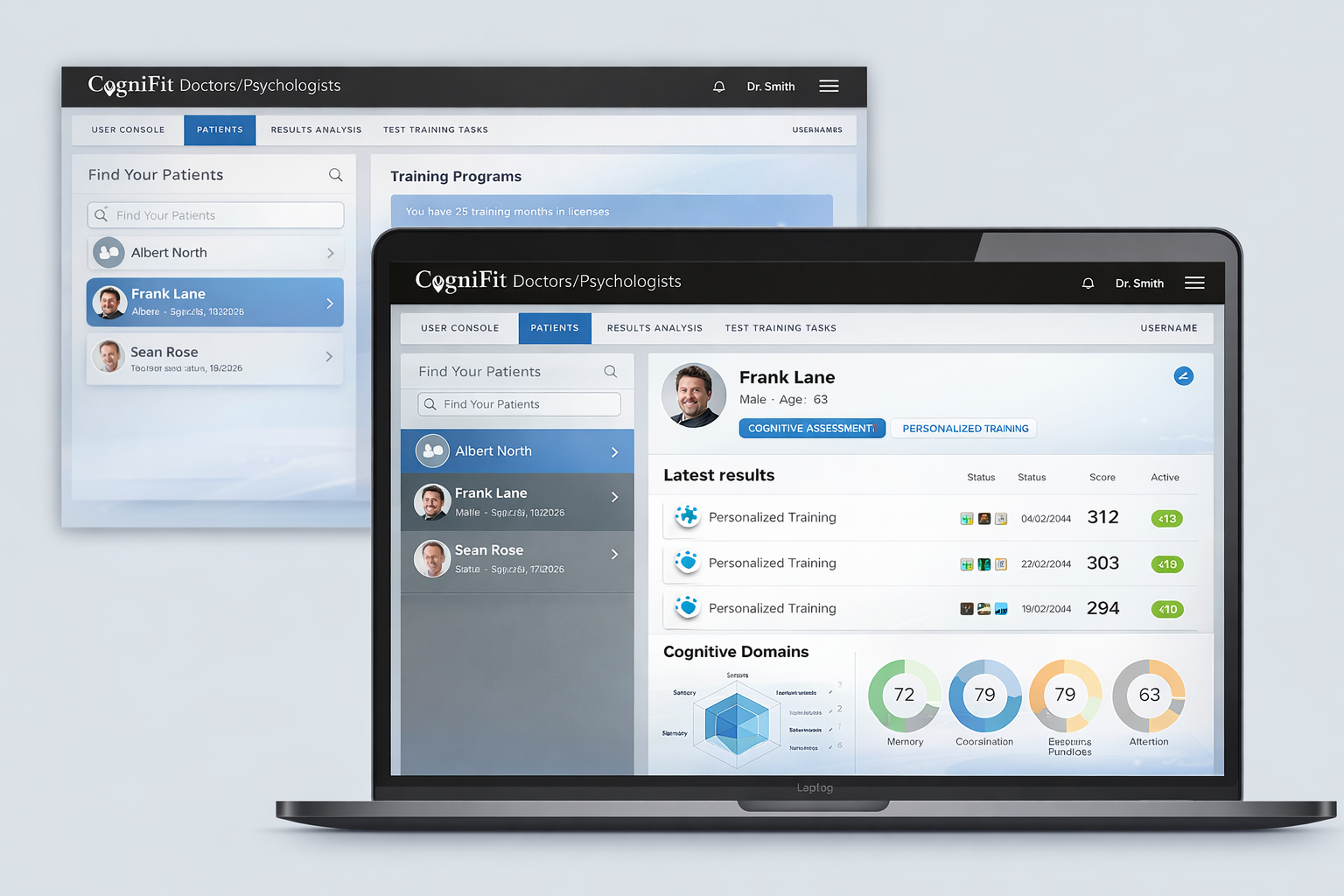
When CogniFit was founded in 1999, this idea was still unusual. Digital cognitive assessment and personalized training were only beginning to emerge, yet Professor Breznitz saw technology as an opportunity to bring rigorous cognitive science into everyday life while remaining firmly grounded in research.
“Professor Breznitz believed that science should never stop at discovery. Its purpose was to help people better understand their minds and improve their everyday lives. That belief continues to guide our work at CogniFit. It is both an honor and a responsibility to carry his vision forward.”
– Carlos Rodríguez, CEO of CogniFit
Challenging the Brain
As Professor Breznitz’s work increasingly focused on lifelong cognitive development, one idea stayed with him throughout his career: the brain continues to change when we keep giving it something new to do.
In Maximum Brainpower: Challenging the Brain for Health and Wisdom, he wrote:
“Just about everything we choose to do can direct our cognition up or down. The effect may be negligible or significant, but it all adds up. The more challenging choices we make, and the longer we do them, the greater the benefit.”
For Professor Breznitz, keeping the brain healthy was never about finding the perfect exercise or solving the right puzzle. It was about remaining intellectually engaged throughout life. Cognitive health was not simply a matter of keeping the mind occupied, but of embracing new experiences, questioning familiar assumptions, and giving the brain opportunities to adapt. The goal was never to stay mentally busy for its own sake, but to keep exploring, learning, and growing.
Routine makes many things easier, but it can also make us less likely to notice, question, or discover something new. Curiosity and a willingness to keep learning, he believed, were among the best ways to keep the mind engaged throughout life.
A Conversation That Reached Millions
In 2010, Professor Breznitz spoke about these ideas with Spanish science communicator Eduard Punset on the television program Redes. Their conversation focused on a question that mattered deeply to him: how can we keep our brains active throughout life?
His answer was simple. The brain, he said, is like a muscle. Keeping it busy is not enough; it needs new experiences that make it adapt.
That is why he encouraged people to make small changes in everyday life. Taking a different route home, using your non-dominant hand, learning a few words in another language, trying a new recipe, or learning how to use a new piece of technology can all encourage the brain to work in different ways instead of relying on the same familiar routines.
He also believed that technology should not be something to fear, especially as we grow older. For many older adults, simply learning to use a computer or a mouse can become a valuable cognitive exercise, engaging attention, coordination, and memory.
Above all, Professor Breznitz wanted people to understand that keeping the brain active does not require extraordinary effort. It begins with curiosity, with a willingness to try something different, and with the belief that learning does not end at any particular age.
That message remains just as relevant today as it was when he shared it more than fifteen years ago.
A Legacy That Continues to Inspire
Throughout his career, Professor Breznitz authored and edited numerous books, published scientific articles, and mentored generations of students and researchers. His work explored subjects as diverse as psychological stress, memory, resilience, decision-making, and cognitive performance, yet a common thread connected them all: a belief in the human capacity to adapt.
His books trace the evolution of that idea. Early works such as Stress in Israel, Denial of Stress, and Cry Wolf: The Psychology of False Alarms examined how people perceive and respond to uncertainty. Together with Leo Goldberger, he also edited the landmark Handbook of Stress, which became an important reference in the field. In Memory Fields, he turned inward, reflecting on his childhood during the Holocaust with honesty and remarkable clarity. Later, in Maximum Brainpower, he brought together decades of scientific knowledge to explore how everyday choices may influence cognitive fitness across the lifespan.
Taken together, these works reveal more than the career of a psychologist. They tell the story of a scientist who never stopped asking how research could help people live better, think more clearly, and remain engaged with the world around them.
His influence extended beyond academia. In 2006, Professor Breznitz was elected to the Israeli Knesset, where he served until 2007 before returning to his scientific work and to CogniFit. Although his time in public service was relatively brief, it reflected his belief that scientific knowledge should contribute not only to research, but also to society.
His work was driven by a lasting curiosity about how the human mind learns, adapts, and responds to change. Whether writing, teaching, conducting research, or speaking to the public, he had a gift for explaining complex scientific ideas in ways that were thoughtful, practical, and accessible.
That same philosophy continues to shape CogniFit today.
The company he founded remains committed to the principles that guided his work from the beginning: grounding cognitive assessment and training in scientific research, recognizing that every individual has a unique cognitive profile, and continuing to explore how technology can make cognitive science more accessible.
Perhaps Professor Breznitz’s greatest contribution was not a single publication, experiment, or invention. It was a way of thinking.
He encouraged us to see the brain not as something fixed, but as something capable of changing throughout life. He reminded us that learning does not belong only to the young, and that curiosity can continue to shape our minds at every age.
One of his most enduring observations captures that belief: “Our cognitive skills are not fixed. At all ages the brain has the ability to respond to new information and new stimuli.”
Those words capture the idea that guided his life’s work. They also continue to inspire the work he began more than two decades ago when he founded CogniFit. And perhaps that is the greatest legacy of all: the reminder that the brain never stops learning.