
The future of neuroscience education: how 3D visualization enhances cognitive mastery


The human brain has long been recognized as the final frontier of biological science. Comprising roughly 86 billion neurons and trillions of synaptic connections, it is undeniably the most complex organ to study. For decades, medical students, researchers, and educators have struggled with mapping this intricate architecture using flat, two-dimensional resources.
In the digital age, traditional pedagogy is hitting a cognitive ceiling. The future of medical education lies not in static pages, but in dynamic and immersive experiences. By leveraging advanced tools such as 3D medical animations, we are changing not only how we teach neurobiology, but how the brain itself processes and retains complex anatomical data.
The limitations of 2D plates
Historically, mastering neuroanatomy meant spending countless hours memorizing cross-sectional diagrams in heavy textbooks. While traditional anatomical atlases have served generations of physicians well, they lack the dynamic clarity of three-dimensional visualization, meaning they don’t provide a true spatial understanding.
When a student looks at a flat image of the brainstem or the basal ganglia, their brain must perform heavy cognitive lifting. They must mentally project those 2D slices into a three-dimensional space. This transition introduces a high margin of error and increases cognitive load.
Without a grasp on spatial awareness, understanding how deep-brain structures wrap around one another becomes challenging. For instance, comprehending the trajectory of complex neural pathways, such as the corticospinal tract or the limbic loop, is incredibly difficult when the visual input is completely static.
3D visualization as a new paradigm for neuroscience learning
By transforming abstract, flat diagrams into interactive, high-fidelity digital models, 3D bridges the gap between theoretical knowledge and structural reality.
When students can rotate, dissect, and peer inside a digital brain, they transition from passive observers to active explorers.
1. Accelerated formation of neural connections
Immersive learning experiences engage multiple sensory modalities simultaneously. When a student manipulates a 3D model of the cerebral cortex, their visual, spatial, and motor centers work in tandem. This multi-sensory engagement helps students and researchers form neural connections faster. By aligning the educational tool with the brain’s natural evolutionary preference for spatial environments, information moves from short-term working memory into long-term storage with greater efficiency.
2. Demystifying cognitive zones and deep structures
The human brain is an interconnected network. Understanding the structure of specific cognitive zones, such as the prefrontal cortex, the hippocampus, or the amygdala, requires seeing them in situ.
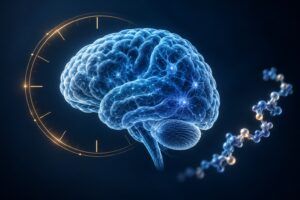
With advanced 3D rendering, a user can isolate the ventricular system, trace the flow of cerebrospinal fluid, and see exactly how the hippocampus tucks into the temporal lobe. Seeing these spatial relationships in real-time demystifies the structural layout, allowing learners to seamlessly connect an anatomical site to its corresponding cognitive or motor function.
Elevating knowledge retention through medical animation
While interactive 3D models are perfect for self-paced study, dynamic animation enhances classroom and lecture-based learning. Static images can show where a structure is, but animation shows how it behaves.
In the context of neuroscience, physiological processes are inherently moving targets. To truly understand how neural networks operate, students must visualize action potentials traveling down axons, neurotransmitters crossing synaptic clefts, and blood vessels perfusing cerebral tissue. Advanced visual tools allow these complex biological mechanisms to be brought to life with clarity.
By integrating these realistic animations into the curriculum, educators can significantly improve knowledge retention. Students no longer have to imagine the mechanics of neurovascular coupling or synaptic plasticity; they can observe these processes in a clear and structured way.
Empowering the next generation of neuroscientists and surgeons
Here is how dedicated 3D content can be used in real-world clinical practice.
• Pre-surgical planning. For a neurosurgery resident, a deep grasp of spatial boundaries is a matter of patient safety. Training with 3D models allows them to rehearse approaches to deep-seated tumors without risk.
• Clinical communication. Future clinicians can use visualization tools to explain complex neurological diagnoses to patients, improving health literacy and patient comfort.
• Cutting-edge research. Researchers studying neurodegenerative diseases, like Alzheimer’s or Parkinson’s, can utilize advanced visual environments to better model disease progression across distinct cognitive zones.
Conclusion: the horizon of neuroscience pedagogy
As neuroscience continues to advance at a rapid pace, our educational methodologies must evolve accordingly.
By embracing 3D visualization, medical education will move away from flat text and step into an era of immersive learning that ensures the next generation will be better equipped to understand the very organ that defines our humanity. Through spatial awareness, anatomical accuracy, and high-quality visualization, we are unlocking deeper cognitive understanding.
The information in this article is provided for informational purposes only and is not medical advice. For medical advice, please consult your doctor