CogniFit Selected to Showcase Applied Cognitive Technology at F1 MADRING 2026

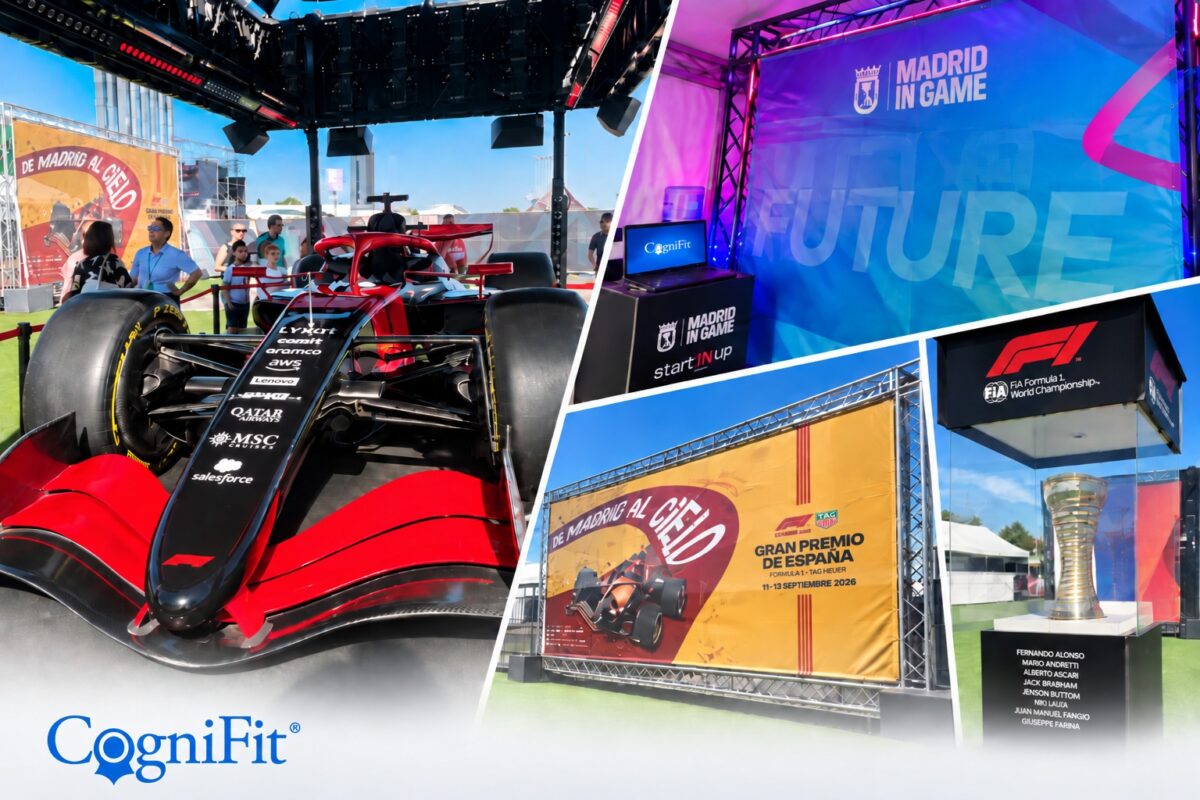
CogniFit joined Madrid in Game at the inaugural 2026 Formula 1 Spanish Grand Prix at MADRING, which drew a confirmed attendance more than 350,000, showcasing digital cognitive assessment and training technology in a setting where attention, reaction time and rapid decision-making are central to performance.
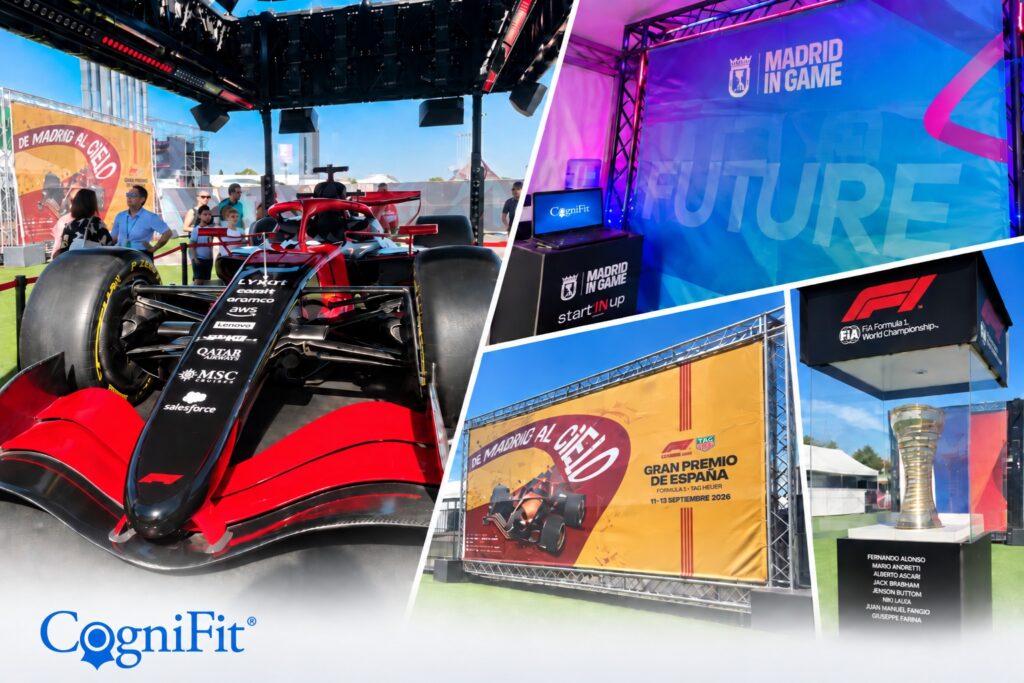
CogniFit, a global company specializing in digital cognitive assessment and training, participated in the Formula 1 weekend at MADRING through the Madrid in Game ecosystem, bringing cognitive technology into one of the most performance-driven environments in sport.
Madrid in Game is an initiative of Madrid City Council focused on strengthening Madrid’s ecosystem around gaming, innovation, entrepreneurship and interactive technology. CogniFit has already participated in Madrid in Game initiatives and is part of Madrid’s Creative Industries and Video Games Cluster.
For CogniFit, the connection with motorsport is not simply about being present at a Formula 1 event. The company has been applying cognitive assessment and training technology in environments where skills such as attention, reaction time, visual processing, coordination and rapid decision-making are particularly relevant, including sport and mobility. CogniFit’s current platform also includes applications across healthcare, research, education and elite sport.
“Formula 1 makes cognitive performance visible in its most demanding form. Behind every fast decision there is attention, perception, reaction time and the ability to process information under pressure. Our work at CogniFit is about making cognitive performance measurable and actionable, and MADRING gives us an exceptional environment to show how cognitive science can connect sport, technology and mobility.”
Carlos Rodríguez, CEO of CogniFit
From Cognitive Training to the Racetrack
Motorsport provides a striking example of how multiple cognitive abilities are required simultaneously. Drivers must continually monitor changing visual information, estimate speed and distance, allocate attention, coordinate responses and make rapid decisions while maintaining control of the vehicle.
Since July 2022, CogniFit has collaborated with Apex Instituto, an elite kart-racing school for future F1 drivers in Northern Italy, integrating cognitive assessment and personalized cognitive training into the development program for young motorsport students.
The collaboration reflects an increasingly multidisciplinary approach to performance: technical preparation and physical conditioning can be complemented by tools that allow cognitive abilities to be assessed and trained in a structured digital environment.
Watch the story: Racing Minds – Apex Instituto and CogniFit
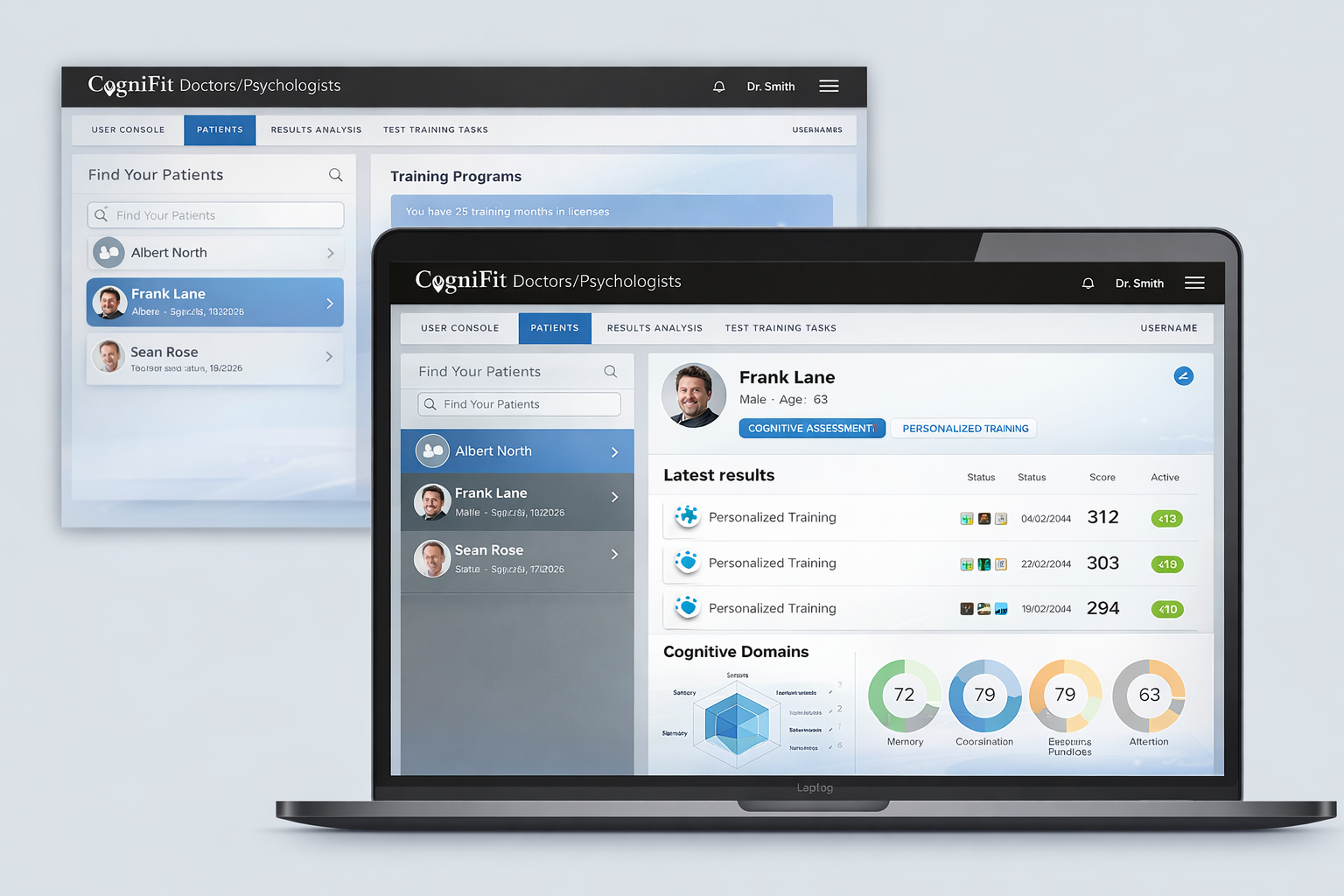
CogniFit also offers a dedicated Sports Performance platform for coaches, sports professionals and athletes, enabling them to assess cognitive skills, assign personalized training programs and track cognitive performance over time.
Beyond the Racetrack: Cognition and Everyday Driving
The relevance of cognition does not end when a racing driver leaves the circuit.
Everyday driving also requires drivers to process visual information, divide attention, estimate distances and speed, coordinate movements and respond to rapidly changing situations.
CogniFit has worked with organizations in the automotive and driver-training sectors. Its historical collaborations include RACC, Young Drivers and Codes Rousseau, which have incorporated CogniFit technology into driver-related applications and programs.
CogniFit has also explored the relationship between cognitive measures and road-safety data. One exploratory analysis used cognitive-task data from 20,231 people aged 18–78 across 123 countries, examining estimation abilities related to time, speed and distance. Those cognitive data were analyzed alongside motor-vehicle crash statistics to investigate possible relationships between demographic and cognitive variables and crash patterns.
Where Cognitive Science, Performance and Mobility Meet
CogniFit’s presence at MADRING brings together areas that are often considered separately: cognitive science, competitive performance, interactive technology and mobility.
For an elite racing driver, fractions of a second can separate one outcome from another. For an everyday driver, attention, estimation and response speed are part of the cognitive demands of navigating a constantly changing environment.
The contexts are very different. The underlying idea is the same: cognition can be measured.
And as digital technologies increasingly make cognitive assessment more accessible, CogniFit sees opportunities to bring scientifically grounded cognitive tools into new real-world settings, while maintaining appropriate boundaries between cognitive measurement, performance applications and clinical use.
About CogniFit
CogniFit is a global pioneer and leader in cognitive healthcare. Since 1999, the company has built one of the world’s most widely used digital platforms for cognitive assessment and training – an FDA-registered solution available in more than 18 languages and trusted by clinicians, neuropsychologists, researchers, educators and health organizations worldwide. CogniFit’s technology is backed by one of the largest bodies of evidence in the field: more than 200 peer-reviewed studies involving 18,000+ participants and 110+ universities and research centers, including over 25 randomized controlled trials, with research conducted at institutions such as Albert Einstein College of Medicine (published in The Lancet Healthy Longevity), Icahn School of Medicine at Mount Sinai, Johns Hopkins University, Tel-Aviv University and the University of Zurich. The platform enables professionals to assess, monitor and train cognition across the entire lifespan – from developmental conditions such as ADHD to peak performance, healthy aging and longevity. Learn more at www.cognifit.com/science.