
Neurobics on the Go: 10 Simple Drills to Engage Your Brain in Under a Minute

Your daily commute and elevator rides are more than just “dead time” – they can be moments to introduce simple cognitive challenges. Discover how small changes in routine may help engage attention using 10 neurobic drills that take less than 60 seconds.

In our hyper-connected, fast-paced world, experiences like the “afternoon slump” or “morning brain fog” are more than just casual complaints; they are widely reported phenomena in everyday life. Often, these states are discussed in relation to cognitive fatigue – a condition in which attention and executive processes may feel less efficient after prolonged mental effort or repetitive stimulation.
While many people dedicate time to physical exercise, cognitive engagement in daily routines is often less intentional. We tend to operate on “autopilot,” relying on deeply ingrained neural pathways to navigate our day. But what if the brief, often overlooked moments of our day could be used to introduce small, potent cognitive challenges?
In this article, we explore the concept of neurobics and present 10 practical drills that illustrate how short, novel mental tasks can be incorporated into everyday situations to promote mental agility.
The “Micro-Moment” Approach: Why Seconds Can Matter
Recent discussions in cognitive science and education have highlighted the idea of “micro-learning” – short, focused bursts of engagement rather than long, draining sessions of continuous effort. The brain is an energy-demanding organ, consuming about 20% of the body’s energy. To conserve this energy, it tends to rely on patterns. When we repeat the same route to work or scroll through the same apps, some researchers suggest that this may be associated with reduced engagement of areas such as the Prefrontal Cortex (PFC).
Using small pockets of time – waiting for an elevator, standing in line, or commuting – provides a practical opportunity to interrupt these routine patterns. By introducing a “speed bump” into your mental autopilot, you may prompt the brain to re-evaluate its environment. These short activities are not intended to replace structured cognitive training, but they serve as illustrations of how variability and novelty can be introduced into daily life.
The Concept of Neurobics: Moving Beyond Autopilot
The term “neurobics” was introduced by Dr. Lawrence Katz, a neurobiologist who proposed that, similar to how aerobic exercise supports physical fitness, neurobic exercises are designed to introduce novel sensory experiences and cognitive challenges. The core principle is simple: use your senses in unexpected ways to break habitual patterns.
When we perform a task differently, such as brushing our teeth with the non-dominant hand or navigating a familiar room with our eyes closed, we may engage neural pathways that are less frequently used during routine behavior. This process is often described as “habit variation” and is discussed in the context of neuroplasticity, the brain’s capacity to adapt through experience.
Neuroplasticity: The Brain’s Capacity to Adapt
Neuroscience research describes the brain as “neuroplastic,” meaning it can reorganize itself by forming new neural connections over time. Landmark reviews in the field (e.g., Draganski et al., 2004; Kolb & Gibb, 2011) describe how learning and experience are associated with changes in brain structure and function.
At the same time, the brain tends to favor efficiency. Some researchers suggest that repetitive tasks may be associated with reduced engagement and lower perceived alertness, which is sometimes described as “brain fog.” This tendency is often interpreted as the brain minimizing resource use during predictable activities.
Introducing variation may increase engagement of attention-related networks, including areas associated with planning, decision-making, and inhibitory control.
Neurotrophic Factors and Cognitive Activity
Scientific literature has explored how mental activity is associated with biological processes, including the expression of neurotrophic factors such as BDNF (Brain-Derived Neurotrophic Factor). These proteins are discussed in the literature in relation to neuronal survival and synaptic plasticity (Park & Poo, 2013).
While the relationship between brief cognitive exercises and these biological mechanisms is an area of ongoing research, neurobic activities are generally described as introducing novelty and variation into cognitive routines.
Level 1: Daily Warm-Up (Beginner Drills)
These exercises are designed to be subtle and quick. They are perfect for the 30-60 seconds you spend in an elevator or waiting for your turn at a desk.
1. The Luria Sequence (Fist–Edge–Palm)
This sequence is a staple in neuropsychology used to examine motor planning and executive control. It requires the brain to switch rapidly between three distinct motor commands.
How to do it: Use one hand against your leg or a flat surface. Make a fist and tap. Turn your hand 90 degrees and tap with the edge (pinky side down). Open your hand and tap with the palm flat.
The Goal: Repeat the sequence Fist-Edge-Palm 10 times without error. If you find yourself doing “Fist-Palm-Edge,” it indicates increased cognitive demand.
Context: Tasks like this are associated with processes such as motor sequencing and inhibitory control, which are often linked to frontal brain regions.
2. Sequential Finger Tapping
This drill targets fine motor skills and coordination between fingers.
How to do it: Touch your thumb to your index finger, then middle, ring, and pinky. Immediately reverse the order (pinky back to index).
The Goal: Maintain accuracy while increasing speed. For an added challenge, perform the sequence with both hands simultaneously, starting from opposite ends.
Context: Fine motor tasks are commonly used in research settings to examine coordination and timing.
3. The Stroop-Type Task
The Stroop effect demonstrates how the brain processes conflicting information – specifically the interference between “word reading” (an automatic process) and “color naming” (a controlled process).
How to do it: Look at any word on a sign in the elevator. Instead of reading the word, name the color of the ink as fast as you can.
The Goal: Reduce the “lag” between seeing the word and saying the color.
Context: This task is a classic tool for studying inhibitory control -the ability to ignore irrelevant information to focus on a specific goal.
4. Reduced-Visual Navigation
Humans are visually dominant. By briefly reducing visual input, we may shift attention toward proprioception (awareness of body position) and spatial memory.
How to do it: Memorize the position of your computer mouse, phone, or coffee cup on your desk.
Close your eyes and reach for it.
Note: Only perform this in safe, stationary environments.
Context: Reducing reliance on vision may increase the use of other sensory inputs, requiring greater attention and coordination.
Level 2: The Neural Bridge (Intermediate Drills)
These tasks involve coordination between both sides of the body and are often associated with communication between the two hemispheres, including pathways such as the corpus callosum.
5. Mirror Air Drawing
Most daily actions are unimanual. This task demands bimanual coordination.
How to do it: Raise both index fingers. Draw a circle in the air with your right hand.
The Challenge: Simultaneously draw a triangle with your left hand.
Context: Bimanual coordination tasks are used in motor control research to study divided attention.
6. Asymmetrical Finger Patterns
The brain tends to favor symmetrical movement patterns. Performing different movements with each hand at the same time increases coordination demands.
How to do it:
- Right hand: Form a “V” (peace sign).
- Left hand: Form an “OK” sign (thumb and index ring).
- Simultaneously switch: Right hand “OK”, left hand “V”.
The Goal: Maintain the switch without your fingers “copying” each other.
7. Ear–Nose Switching
This exercise requires crossing the “midline” of the body, which is often associated with coordination between the left and right sides of the body.
How to do it:
- Hold your nose with your right hand.
- Hold your right ear with your left hand (crossing your arms).
- Switch positions: Left hand to nose, right hand to left ear.
Context: Cross-body movements are often used in coordination exercises involving spatial orientation and motor flexibility.
Level 3: Advanced Challenges
These drills are designed to increase cognitive load – the total amount of mental effort being used in working memory.
8. Dual Luria Sequence
How to do it: Perform the Fist–Edge–Palm sequence with both hands simultaneously.
The Real Challenge: Start the right hand at “Fist” and the left hand at “Palm.” Cycle through the sequence so they are always in different positions.
The Goal: Prevent your hands from syncing up.
Context: Tasks like this increase coordination demands and are associated with working memory processes.
9. Numerical Scanning
This exercise simulates the visual search tasks used in professional cognitive assessments.
How to do it: Look at the elevator button panel. Identify all even numbers in ascending order (2, 4, 6…). Then, identify all odd numbers in descending order.
Context: Visual search tasks are commonly used to assess attention and processing speed.
10. Polyrhythmic Tapping
How to do it: Tap a 2-beat rhythm with your left hand (1-2, 1-2). Simultaneously tap a 3-beat rhythm with your right hand (1-2-3, 1-2-3).
Context: Rhythmic tasks are often associated with cerebellar activity, which has been studied in relation to motor control, timing, and language.
Beyond Short Exercises: The Role of Personalized Cognitive Training
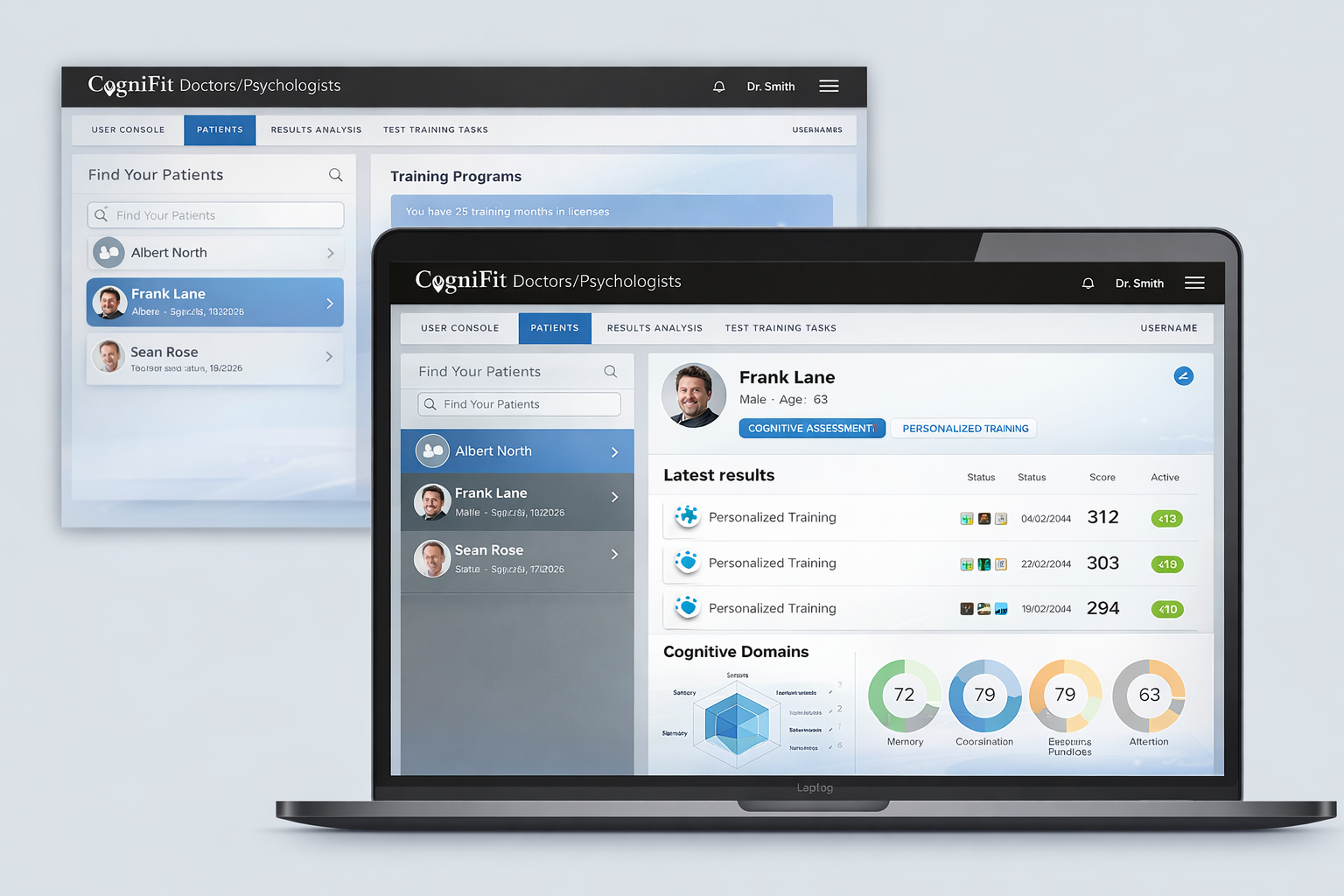
Short activities can introduce novelty, but they do not replace consistent cognitive engagement. Digital tools offer a more personalized approach. Platforms like CogniFit adapt tasks in real time based on user cognitive performance.
Objective measurement allows tracking response time and accuracy, adaptive difficulty adjusts the level of challenge based on performance, and multi-domain engagement involves different cognitive processes within the same training environment.
Conclusion: Introducing Variation Into Daily Routines
The brain is an incredibly responsive organ, influenced by experience and activity. Research in neuroscience suggests that learning and adaptation are ongoing processes.
Whether through simple daily neurobic challenges or more consistent cognitive activities, the key idea is to introduce variation. Moving away from “autopilot” and engaging in novel tasks can create opportunities for increased cognitive engagement.
Next time you are in an elevator, on the subway, waiting in line, or at your desk, instead of reaching for your phone, try a Luria Sequence or a Numerical Scan. Even brief moments can be used to introduce new patterns of attention and coordination.
The information in this article is provided for informational purposes only and is not medical advice. For medical advice, please consult your doctor.
References
- Draganski, B., et al. (2004). Changes in grey matter induced by training. Nature. https://doi.org/10.1038/427311a
- Kolb, B., & Gibb, R. (2011). Brain plasticity and behaviour in the developing brain. Journal of the Canadian Academy of Child and Adolescent Psychiatry.
- Park, H., & Poo, M. (2013). Neurotrophin regulation of neural circuit development and function. Nature Reviews Neuroscience. https://doi.org/10.1038/nrn3379
- Stroop, J. R. (1935). Studies of interference in serial verbal reactions. Journal of Experimental Psychology, 18(6), 643–662. https://doi.org/10.1037/h0054651